Amboseli is widely known for elephants, but its wildlife picture is broader than most first-time visitors expect. Before you arrive, it helps to understand what species are reliably present, which ones require luck and timing, and how the park’s different habitats shape what you are likely to see on any given drive.
This guide covers the full animal range, from the signature megafauna down to the birds and wetland life that make Amboseli genuinely rich even on a quiet mammal day.
The Short Answer: What to Expect
In Amboseli, you can reliably expect to see:
- Elephants, in family groups and sometimes very large herds
- Buffalo
- Zebra and wildebeest on the open plains
- Giraffe
- Various antelope species, including Grant’s and Thomson’s gazelles
- Lions, present in the park but requiring good timing and a sharp guide
- Hyenas
- A wide range of bird species, particularly around the swamps
With luck and the right conditions, you may also encounter:
- Cheetah
- Leopard
- Hippo in or near the permanent swamps
- Jackals and smaller predators
- Warthog
That is a meaningful species list for a single destination, and it sits on top of an exceptionally photogenic landscape.
Elephants: The Species That Defines This Park
Amboseli’s elephant population is among the most studied and most photographed in the world. The combination of permanent swamps, open plains, and decades of research has created conditions where elephant viewing is more consistent here than almost anywhere else in Kenya.
What makes Amboseli elephant viewing distinctive:
- Family groups of all sizes move through open country where you can watch them for extended periods
- The flat terrain creates long sightlines that allow photography and observation without obstruction
- The research history means many individual elephants have been documented over generations, giving guides unusual depth of knowledge about who you are looking at
The Amboseli Trust for Elephants, which has individually identified and tracked elephants here since 1972, put the population at 2,065 individuals at the end of 2025, recovering from elevated mortality during the 2022 to 2023 drought years. That is one of the most thoroughly documented elephant populations anywhere in the world, which is part of why guides here can often tell you not just how many elephants you are looking at, but who they are.
Elephants are the species most travellers come to Amboseli specifically for. They are also the species most likely to deliver on that expectation, even on a short safari.
Lions: Present, Rewarding, Not Automatic
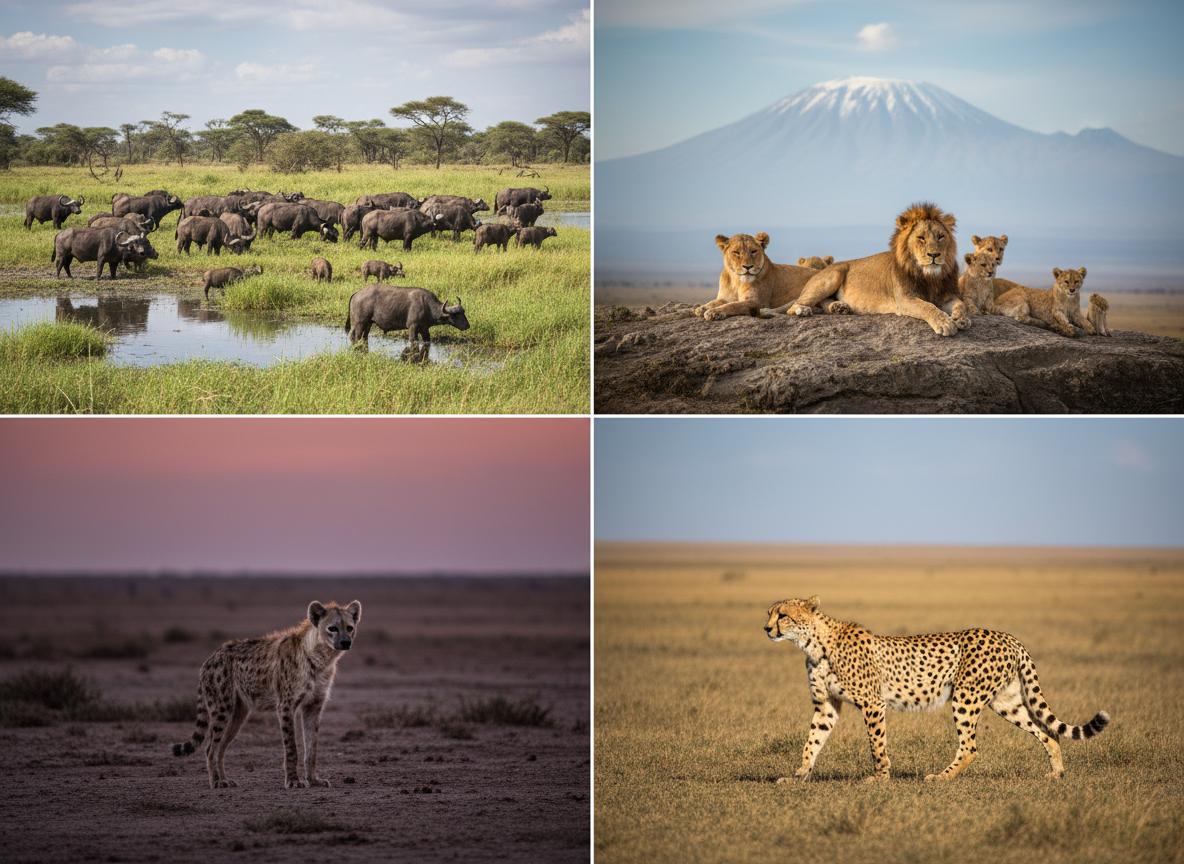
Lions are well established in Amboseli. Population estimates have placed the count at around 40 to 50 individuals, which represents a meaningful recovery for the park.
That said, lions here are not as automatic as elephants. The terrain is open enough that sightings are often excellent when they happen, but a lazy pride can be genuinely hard to find in the wider landscape. A good guide with current knowledge of pride movements makes a large difference.
Practical expectation: lions are a realistic target, especially over two or three nights. They are not something you should expect to simply come across on your first drive.
Buffalo: One of the Park’s Solid Big Mammals
Buffalo contribute to Amboseli’s claim of four Big Five species, alongside elephant, lion, and leopard. They tend to be found in areas with reasonable vegetation and proximity to water.
Buffalo may not be the emotional highlight for most visitors, but they add real weight to the big-mammal feel of the park. Herds can be large, and bulls in the open country photograph well against the Kilimanjaro backdrop on clear mornings.
Giraffe, Zebra, and Wildebeest: The Open Plains Cast
These are the species that keep Amboseli drives busy and visually active between headline sightings.
Masai giraffe are present throughout the park and particularly visible when browsing at the edge of wooded areas. Plains zebra and wildebeest move across the open grasslands and are often found in mixed groups with gazelles. Their presence matters not just aesthetically but ecologically: these grazers support the predator population and create a layered landscape that feels alive across the whole drive, not just during a single sighting.
Amboseli’s open terrain is one of its strengths for viewing these species. Unlike denser bush environments, you can often see significant distances and watch animal movement play out naturally.
Cheetah and Leopard: Possible, but Luck-Dependent
Both species are part of the Amboseli ecosystem.
Leopard is occasionally seen, particularly in areas with denser cover. It is one of the four Big Five species present but is genuinely difficult to encounter reliably. If leopard is a priority, managing expectations honestly helps.
Cheetah is also possible, and open-country cheetah sightings in Amboseli can be exceptional when they happen. The flat terrain means you can sometimes watch a hunt unfold from a good distance.
Neither species should anchor your expectations for the whole trip. Both are genuinely rewarding when seen, and both are more likely over multiple drives than in a single short visit.
Hyenas, Jackals, and the Scavenger Layer
Spotted hyenas are present in Amboseli and can be seen on most multi-day visits. They are active in the early morning and at dusk, which aligns naturally with game-drive timing. Jackals are also common, particularly around kills or in areas where other predators have been active.
These species often get overlooked in favour of the bigger names, but they add real ecological texture to a safari. Experienced guides and repeat visitors tend to appreciate them more with each trip.
Hippos and Wetland Wildlife
Amboseli’s permanent swamps are fed by underground water from Kilimanjaro and support a wetland ecosystem that is unusual for a savannah park. Hippos are present in these swamp areas, though they are less commonly seen than in riverine parks.
The importance of the swamps goes beyond hippos: they support elephant movement, bird concentrations, and habitat variety that separates Amboseli from a purely dry grassland experience.
Birds: Far More Significant Than Most Travellers Expect
Amboseli has recorded more than 425 bird species. That number is large enough to make the park genuinely worthwhile for birders, not just as a secondary activity but as a real focus.
Species recorded in the park include:
- Flamingos, in appropriate wet conditions around the lakes
- Pelicans, herons, and egrets around the swamp margins
- Secretary birds on the open plains
- African fish eagles near water
- Jacanas on floating vegetation
- Raptors of various species
For travellers who enjoy wildlife beyond mammals, Amboseli’s bird diversity adds a full additional layer to the experience. Even for mammal-first visitors, a guide who points out birds between sightings makes drives feel fuller and more interesting.
Is Amboseli Good for the Big Five?
Amboseli is best described as a four-of-the-Big-Five park.
Present:
- Elephant
- Lion
- Buffalo
- Leopard
Not present in the national park: rhino. If completing the Big Five is a primary goal, Amboseli should be paired with another destination such as Ol Pejeta or Lake Nakuru. If the goal is outstanding wildlife in a highly photogenic, readable landscape, the absence of rhino does not significantly reduce Amboseli’s appeal.
Wildlife by Focus Area
| Priority | What Amboseli Offers |
|---|---|
| Elephants | One of Kenya’s strongest destinations |
| Plains game | Excellent: zebra, wildebeest, giraffe, gazelles |
| Predators | Realistic but not guaranteed: lions and hyenas most likely |
| Birds | 425+ species recorded, especially strong near swamps |
| Photography | Outstanding: open terrain, good light, iconic Kilimanjaro backdrop |
| Big Five | Four of five: elephant, lion, buffalo, leopard |
Is Amboseli Good for First-Time Safari Visitors?
Yes, and particularly so.
The open terrain means animals are visible and readable without dense bush obscuring movement. The elephant population is so reliable that even a first-time visitor can expect a genuinely significant encounter. Plains game is plentiful enough that drives stay interesting between headline sightings. And the landscape, with Kilimanjaro as a potential backdrop, creates one of the most visually distinctive safari settings in Africa.
First-time visitors who arrive with realistic expectations about what is automatic versus what requires luck tend to leave with some of the highest satisfaction of any Kenya destination.
What If You Do Not See Cats?
This is worth addressing directly. Some visitors to Amboseli do not see lions or cheetah on a given trip. The park is still worth the visit.
Elephant viewing alone justifies Amboseli for most people. Add the birdlife, the plains game, the scenery, and the accessibility of the landscape, and even a trip without significant predator sightings delivers real value. The park’s identity is not built on big-cat density the way the Maasai Mara is. It is built on elephants, atmosphere, and a particular landscape quality that is unlike anywhere else in Kenya.
Explorer Notes
Practical details that help calibrate expectations:
- Season affects bird diversity and vegetation. Wet-season Amboseli, from approximately March to May and November to December, often produces better birding and greener scenery. Dry season concentrates wildlife near water.
- The swamp areas, particularly around Longinye and Ol Tukai, are consistently the best zones for elephants and for wetland birds. Early-morning drives that start in these areas tend to be productive.
- Kilimanjaro is clearest at dawn and often disappears behind cloud by mid-morning. If mountain photography matters, plan for very early starts.
- A two-night stay is the minimum for a meaningful introduction. Three nights gives time to cover different parts of the park and return to productive areas on multiple drives.
Conclusion
Amboseli is an elephant-led, bird-rich, open-country park with a wider wildlife cast than most first-time visitors expect. Lions, buffalo, cheetah, leopard, giraffe, zebra, hippo, and more than 425 bird species fill out a picture that holds up well across multiple visits and different traveller types.
The park works best for travellers who go in understanding that elephants are the signature draw, that predators require timing and patience, and that the landscape itself is as much a part of the experience as any single species.
Related Reading
For more on planning your Amboseli visit, see our guides on where to see elephants in Amboseli, what to wear in Amboseli, and how to get to Amboseli from Nairobi. For wildlife context and park comparisons, trunktrailssafaris.com has detailed destination guides for Kenya’s major safari parks.
Turn this reading into a real itinerary with help from a Kenya-based safari team.
Start Planning Your Safari